The Glycemic Rollercoaster: Why Glucose Spikes Crush Productivity
In metabolic science, severe post-prandial glucose spikes followed by reactive hypoglycemia are the primary biological culprits behind the dreaded 2:00 PM afternoon brain fog and sugar cravings.
Whether managing Type 1 or Type 2 diabetes, monitoring pre-diabetes, or optimizing metabolic health as a health-conscious professional, understanding how specific meals impact your blood sugar is transformative.
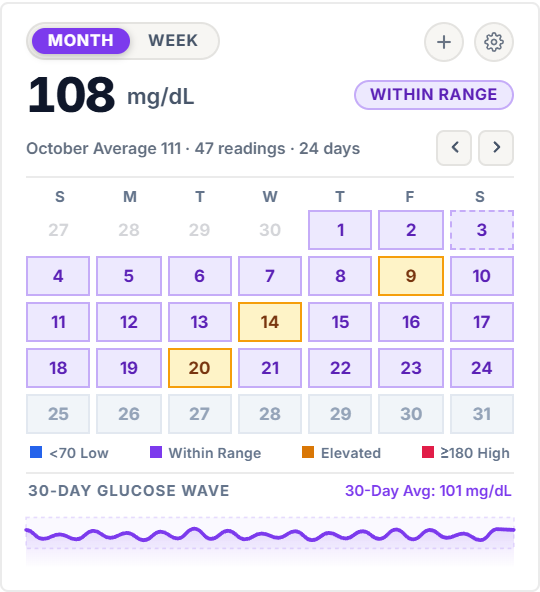
The Blood Sugar Radar brings clinical clarity to your Notion workspace: log glucose readings in under five seconds with contextual tags (Fasting, Post-Meal, Bedtime) to connect nutrition directly to sustained cognitive energy.
ADA Clinical Reference Corridors: Understanding Your Numbers
Raw glucose numbers can be confusing without context: 135 mg/dL is elevated if fasting, but completely normal two hours after a hearty meal.
The widget automatically evaluates your readings against American Diabetes Association (ADA) clinical benchmarks, highlighting whether you are Within Range (Violet), Elevated (Amber), High (Coral ≥180), or Low (Blue <70).
Switch seamlessly between American mg/dL and international mmol/L units with a single toggle.
4 Metabolic Health Strategies for Notion
The Post-Meal 90-Minute Check
Test blood sugar 90-120 minutes following complex meals to evaluate glycemic response and insulin sensitivity.
The Morning Fasting Baseline
Record fasting glucose immediately upon waking to monitor liver glycogen release and baseline metabolic health.
The Food Experimentation Log
Position the radar alongside recipe databases to discover which meals sustain stable energy without sharp spikes.
The Low-Glucose Hypoglycemia Safety Rail
Keep the color-coded blue warning zone visible to treat low blood sugar (<70 mg/dL) promptly.
Architectural Breakdown: Blood Sugar Radar vs. Generic Health Databases
Why dedicated ADA glucose radar widgets provide greater safety and clarity than flat spreadsheets:
Database Tables & Records
Best for deep historical storage, relations, and structured records